Four Seasons, One Hour: The Home Air Check-Up Most UK Homes Never Get Round To

Photo: home maintenance checklist homeowner checking air vent window UK, via 4.bp.blogspot.com
There's a particular kind of British optimism that says the house will sort itself out. Windows get opened when it's warm, extractor fans get switched on when something's burning, and the rest of the time the place just gets on with it. For a lot of homes that works well enough. For the rest, the warning signs arrive in slow motion: a bedroom that smells faintly musty by February, a living room that feels close by nine in the evening, an air conditioning unit that starts rattling in the first hot week of July.
None of these are disasters. They're all maintenance issues, and they're nearly all cheaper to head off than to fix. What follows is a simple four-season check-up — roughly an hour in total across the year, plus a few minutes a month.
Spring: shake off the winter
The first warm week is the moment to undo six months of closed windows.
Check every extractor. Kitchen and bathroom fans should pull a tissue against the grille without much effort. If they don't, the duct may be blocked or the unit is tired. A fan that wheezes is doing very little except making a noise.
Look at your vents properly. Trickle vents on window frames get painted over, taped up or jammed with old cobwebs. Open them, clean the slots and check they still slide. If someone in the house sealed them during a cold snap, that's worth knowing about.
Deal with the filters. If you have air conditioning, mechanical ventilation or a portable purifier, spring is filter season. Washable foam filters get a rinse and a full dry; disposable ones get replaced. A clogged filter doesn't just reduce airflow — it can leave the system working harder and, in a cooling unit, blowing slightly stale air around the room.
Dust the heat sources before you stop using them. Radiators, towel rails and the back of the boiler cupboard hold a winter's worth of dust. Vacuuming now saves that burnt-dust smell in October.
Summer: when the cooling kit earns its keep
British summers don't demand much, which is exactly why cooling equipment gets forgotten until it's needed.
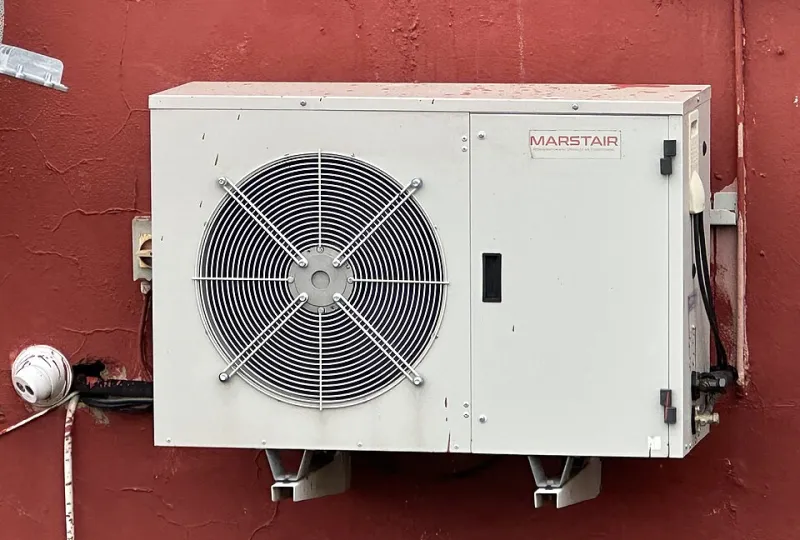
Run the air conditioning for ten minutes in late spring, before the first genuinely hot weekend. Listen for rattles, check that it's actually blowing cold, and make sure the outdoor unit isn't buried under a hedge or a stack of garden chairs. Clear about half a metre around it and you'll do more for its efficiency than any gadget will.
If your unit has a condensate drain, check it isn't dripping somewhere it shouldn't. A slow drip down an internal wall is one of the more expensive ways to learn this lesson.
This is also the season for purge ventilation — the fancy term for flinging windows open. On still, warm days, opening opposite windows for ten minutes moves more air than leaving one ajar all afternoon. Do it in the morning before the day heats up and the house stays fresher for longer.
Autumn: batten down, but not too tight
As the heating comes on, homes tighten up. That's when humidity starts to climb and condensation appears on the glass.
Buy a cheap hygrometer if you haven't got one. Indoors, somewhere between 40% and 60% relative humidity is the sensible band. Much above 65% for long periods and you're creating the conditions for mould on cold external walls, particularly behind furniture and in corners of bedrooms.
In autumn, the goal is to keep extraction working while heat goes on: cook with the extractor running and for ten minutes after, shower with the fan on and the bathroom door closed, and dry laundry outdoors where possible. A heated airer in an unventilated spare room is a reliable way to make a damp problem out of nothing.
Trickle vents can stay open through autumn. The heat loss is modest and the background air change is worth it.
Winter: the damp season
Winter is when the symptoms show. Streaming windows on a morning aren't just a nuisance — they're moisture that has to go somewhere, and if it can't leave, it settles into plaster, timber and fabric.
Two habits do most of the work. First, ventilate briefly and widely rather than leaving a window ajar all day: ten minutes of full exchange loses less heat than hours of a crack. Second, keep the background path clear — trickle vents open, extract fans working, internal doors open enough for air to move around the house.
If you have mechanical ventilation with heat recovery, this is when the filters need attention most, and when you should check the summer bypass hasn't been left in the wrong position.
The five-minute monthly habit
Once a month, walk the house and do three things: look at the bathroom ceiling and window reveals for new patches, listen to each extractor fan, and check the filter light or grille on any ventilation or cooling kit. That's it. Five minutes, no equipment.
What you can safely ignore
Plenty of advice online assumes a level of gadgetry most UK homes don't need. You don't have to monitor CO2 in every room, and you don't need a dehumidifier running all winter unless you've actually measured a problem. Fix the basics — airflow, extraction, filters — and most of the rest looks after itself.