Start the Cool Before the Sweat: A Bedtime Air-Con Plan for British Heatwaves
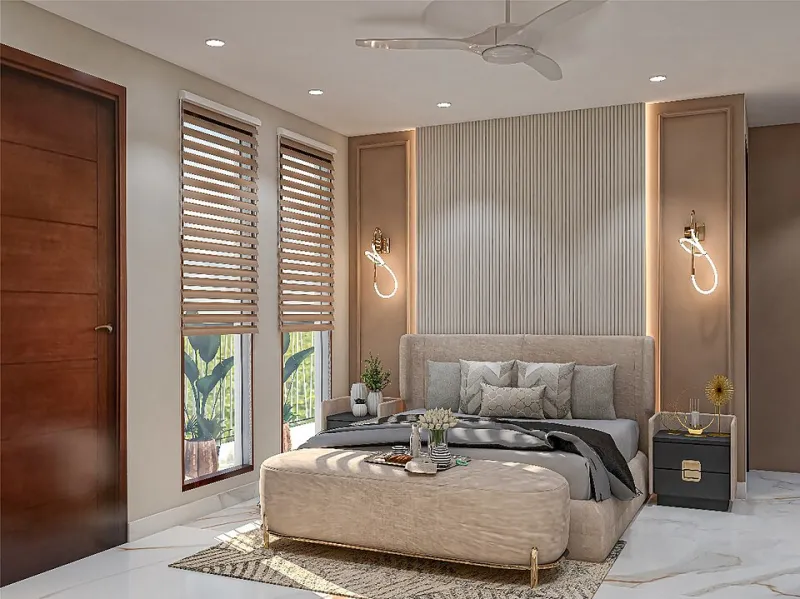
Photo: SPL Interiors1, CC BY 4.0, via Wikimedia Commons
There's a particular kind of British summer night that catches people out. The day has been warm but not record-breaking, the evening has been pleasant enough with the back door open, and then at half ten you go up to bed and the bedroom is... heavy. Not hot exactly. Just thick, still, and about four degrees warmer than you'd like.
So on goes the air conditioning, full pelt, and you lie there listening to it work while the room slowly, grudgingly gives up its heat. By the time it's comfortable, you're wide awake and it's past midnight.
The problem usually isn't the machine. It's the timing.
Why a hot room doesn't cool down quickly
Air conditioning removes heat from the air. That part is straightforward and, in a well-sized unit, quick.
But a bedroom on a warm day isn't just warm air. It's a small collection of stored heat: the brick or blockwork in the walls, the plasterboard ceiling, the carpet, the mattress, the wardrobe full of clothes, the chimney breast if you've got one. All of that has been soaking up warmth since mid-morning. When you switch the unit on at 10pm, it isn't fighting the air — it's fighting the fabric of the building, and the building has a lot more heat in it than the air does.
This is why the first hour of a late blast feels so disappointing. The air coming out of the unit is genuinely cold, but the room still feels warm because everything in it is radiating heat back at you. Cool the air, and the walls simply warm it up again.
Get ahead of that dynamic and the same unit suddenly feels twice as capable.
Start earlier than feels necessary
The instinct is to wait until the room is uncomfortable. Better to start while it's still tolerable.
On a genuinely hot day — say the Met Office has the temperature into the high twenties and the upstairs hasn't dropped below 26°C by early evening — switching on around 7pm for a bedroom you'll use at 11pm is not extravagant. It's just sensible sequencing. Ninety minutes to two hours of pre-cooling does more for a night's sleep than four hours of frantic effort starting at bedtime.
If the day has been milder, or your bedroom is on the north side, forty-five minutes is often plenty. The point is to have the room already cool and the building's stored heat partly drawn out before you walk in, rather than asking the unit to do everything in the twenty minutes before you get into bed.
There's a practical side benefit too. Cooling a room in the early evening, when the unit is working against a falling outdoor temperature, generally uses less energy than cooling it at midnight when the compressor is working flat out. Comfortable and slightly cheaper is a decent combination.
Close the curtains at the right moment — and the windows at the wrong one
Pre-cooling only works if you're not simultaneously letting heat back in.
Through the afternoon, keep the bedroom's curtains or blinds closed — particularly if it faces west or south-west, where the late sun does most of its damage. Blackout linings help more than people expect, and external shading, if you have it, is better still.
Then, as the evening cools, there's a decision to make. If the outdoor air drops below the indoor temperature — which on many UK summer nights it does, eventually — opening the window for twenty minutes to purge the room before you start cooling is worthwhile. But once the unit is running, the window needs to be shut. An air conditioner with an open window is a very expensive way of cooling the garden.
Use the timer, and stop treating it as a luxury feature
Almost every modern split system sold in the UK has a timer, and most of them are never used. That's a shame, because a timer is the whole trick here.
Set it to come on ninety minutes before you head upstairs, and to switch off — or step up to a higher setpoint — around two or three hours after you fall asleep. Many people find they don't need the unit running at 4am; the room has stabilised, the night air has cooled, and a fan is enough. That's quieter, kinder to the electricity bill, and just as comfortable.
If your unit has a smart thermostat or app control, even better. You can adjust from the sofa rather than making a special trip upstairs to press a button.
Fans aren't a substitute, but they're a good partner
A ceiling fan or a decent pedestal fan doesn't cool air. It moves it, which helps your skin lose heat and makes a warm room feel more bearable.
Run a fan alongside the air conditioning and you can often nudge the thermostat up by a degree or two without noticing the difference. That's a meaningful saving over a whole summer, and it lets the unit run at a lower, quieter output rather than cycling on and off at full power.
The old rule about not using fans in a sealed room with no air movement is worth remembering, though. If you're running an air conditioner with the door and windows shut, you've got dehumidified, filtered air circulating — that's fine. A fan in a genuinely stuffy, unaired room is a different matter, and a pre-bed purge with the window open costs nothing.
The door question
Close the bedroom door. It's the single most effective thing you can do for the room you actually sleep in, because you're cooling a defined space rather than the whole upstairs.
But do leave a gap, or open it briefly, when you first go up. A bedroom that's been sealed all evening with the unit running can feel a little flat. Thirty seconds of cross-ventilation before you settle, then shut it, gives you the best of both.
If you've got a landing or hallway that gets hot, don't try to cool it with the bedroom unit. Close the door and let the bedroom be the bedroom.
What to expect on a real heatwave night
Be realistic. A single split unit in a British bedroom, on a night that doesn't drop below 22°C outdoors, will make the room comfortable — but it won't turn it into a cellar. Aim for 24 to 25°C rather than 18, and you'll sleep better, argue with the thermostat less, and avoid the nasty shock of stepping out into a warm landing at 3am.
The units that seem to "not work" on hot nights are usually the ones being asked to drop a room ten degrees in twenty minutes. Give yours a head start and it will quietly do the job.
Start earlier, shut the window, set the timer, let a fan do the light work. That's the whole pre-cool, and it's worth the ten minutes it takes to set up.