Solid Walls, Sash Windows, Hot Summers: Cooling a Victorian Terrace Properly
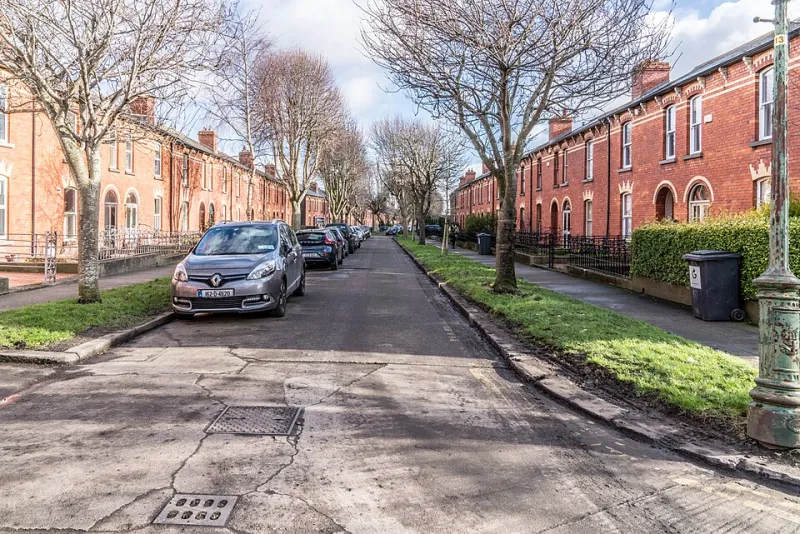
Photo: William Murphy, CC BY-SA 2.0, via Wikimedia Commons
There is a particular kind of heat that settles into a Victorian terrace. It arrives in the afternoon, sinks into the front wall, and then sits there radiating gently into the front room until well past ten at night. If you live in one, you already know the feeling. If you are about to spend money trying to fix it, this is worth reading first.
Why solid brick behaves so differently
A modern house has a cavity between its inner and outer leaf, plus a layer of insulation in the loft. A Victorian terrace has none of that. It is essentially a very thick, very heavy wall, and heavy things take a long time to warm up and a long time to cool down.
That is brilliant in a cold snap. It is less brilliant in July, when the brickwork has spent all day absorbing sunlight and then releases it back into your bedroom overnight. Cavity wall insulation is off the table for most of these properties, and external insulation is often a non-starter in a conservation area. So the plan has to be about managing heat gain and moving air, rather than trying to change the fabric of the building.
The portable unit problem
Almost everyone in a hot Victorian terrace buys a portable air conditioner first. Almost everyone regrets it.
A single-hose portable unit takes air from the room, pushes it through the machine, and dumps the hot exhaust out of the window. That is fine in principle, except that the air it dumps outside has to be replaced. It gets replaced by air pulled in from the rest of the house, through gaps under doors and around the loft hatch — warmer air, from warmer rooms.
Then there is the window. A sash window is not built for a flat exhaust panel, and the moment you seal one sash with tape and plastic, you lose the one thing older houses are genuinely good at: night-time purge ventilation. Add the noise — somewhere between a fridge and a hairdryer, six feet from your pillow — and the appeal fades fast.
Portables are not useless. They work best in a well-sealed box room where you can close the door and accept the noise. In an open-plan through-lounge, they mostly stir warm air around.
What actually works, roughly in order
Shade the glass before it heats up. Internal blinds are a last line of defence — by the time sunlight hits a roller blind, the heat is already inside. External shutters, awnings, or even a simple fabric sail over a south-facing bay make a disproportionate difference. If you rent or cannot fix anything to the brickwork, a reflective film on a roof-light or a stair window is a reasonable compromise.
Learn the night purge. On a still, warm evening, the air outside is often a good five degrees cooler than the air in a first-floor bedroom. Opening a top sash at the front and a lower sash at the back creates a cross-flow that clears a house in twenty minutes. The catch is security, which is where sash restrictors and window locks earn their keep.
Then add mechanical cooling, room by room. This is the key expectation shift. A split system in a Victorian terrace is a room solution, not a house solution. One unit in a loft-converted bedroom changes that room completely. It does nothing for the kitchen two floors down.
Where a split system earns its place
High-wall units in first-floor bedrooms are the classic success story. Warm air rises, so the room that suffers most is usually upstairs at the back, and a modest 2.5kW unit will handle a standard Victorian bedroom without strain. A loft conversion is the other obvious candidate — those rooms are effectively inside a hot box, and no amount of opening the Velux will fix a south-facing roof-light at 4pm.
Before you commit, three things to check:
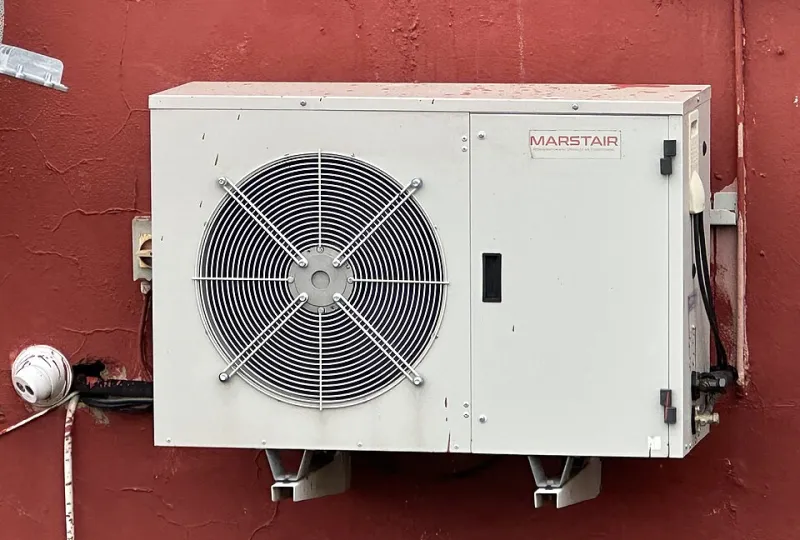
- Where the outdoor unit goes. It needs airflow and somewhere it will not annoy the neighbours. On a terraced street, that usually means a rear wall or a bracket above a rear extension. In a conservation area, or a flat with a shared freehold, get permission in writing first.
- Listed buildings and Article 4 directions. Some areas restrict external alterations as standard. A quick call to the local planning department costs nothing.
- Electrical capacity. Older terraces often have modest consumer units. Your installer will want to know what is spare.
Drilling into period brickwork
This is where a good installer shows their colours. Victorian brick is often softer than the drill bit you would instinctively reach for, and mortar joints are lime-based — hard cement patching later will look wrong and can trap moisture.
A few practical points worth raising with whoever is quoting:
- Ask for rotary drilling rather than heavy hammer action on soft brick, to avoid blowing the face off and leaving a spalled patch you will see from the street forever.
- Check the wall for hidden runs before anything is fixed — old gas pipes, redundant conduits and lead water mains turn up in unexpected places.
- Avoid drilling directly under a lintel or into the thin pier between a window and the party wall.
- Make good with a lime-based mortar that matches the existing pointing, not a grey cement blob.
None of this is exotic. It is just the difference between a job that disappears into the building and one that leaves a scar.
The bit people forget
Cooling a Victorian terrace is rarely about one appliance. It is shading, it is moving air at the right time of day, it is accepting that the front wall will be warm at 9pm whatever you do, and then choosing the one or two rooms where comfort actually matters enough to install something proper.
Get that order right and the house becomes manageable. Get it wrong, and you end up with three portable units, a lot of extension leads, and a very warm bedroom.