The Quiet Drain Behind Your Cool Air: A UK Homeowner’s Guide to Air-Con Condensate

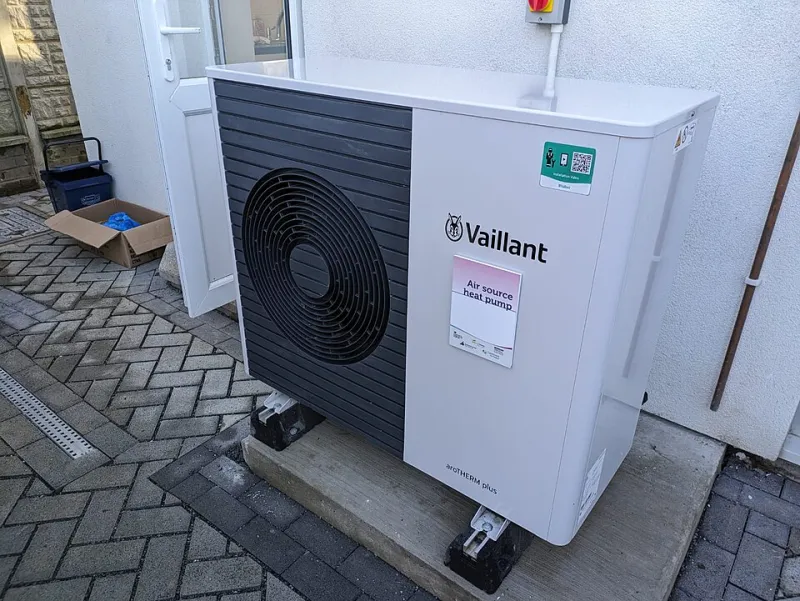
Photo: Jojohot1, CC BY-SA 4.0, via Wikimedia Commons
When an air-conditioning unit cools a room, it does more than lower the temperature. It pulls moisture out of the air. That’s a welcome side effect in a sticky British summer, but the water has to go somewhere. Most of it leaves through a hidden route: a drip tray, a drain pipe and, sometimes, a small pump. When that route works, you never notice it. When it doesn’t, you get the kind of damp problem no one wants to discover above a ceiling or behind a skirting board.
A small river you never see
Inside a typical split-system indoor unit, warm room air is drawn across a cold cooling coil. Moisture in the air condenses on the coil, just like beads forming on a cold glass. The droplets fall into a shallow tray underneath — the condensate drip tray — and from there into a drain pipe. Gravity usually does the rest, carrying the water outside or to a suitable waste connection. If gravity can’t do it, a small condensate pump takes over.
In cooling mode, this is normal and constant. On a humid day, a working unit can produce a surprising amount of water. That’s not a fault. It’s the machine doing its job. The problem starts when the water stops moving.
Why a blocked drain is more than a slow drip
A drip tray is a damp, dark little place, and dust, lint and biofilm can build up in it over time. The drain pipe can clog too, especially if it has a shallow fall, a kink or a section where water sits. Once the water can’t escape, it stands in the tray. Then it starts to smell musty, overflow or find its own route into the fabric of the building.
In a UK home already dealing with condensation, damp patches and winter mould, that extra hidden moisture is the last thing you need. A blocked condensate drain can leave water stains on a ceiling, bubbling paint, damp plaster or a patch on a carpet. It can also feed mould inside the unit, which may explain a stale, earthy smell when the system starts up. If you notice a musty odour every time the cooling kicks in, don’t just reach for an air freshener. The drain is one of the first things to check.
What a healthy installation should look like
A good installation gives water an obvious, reliable way out. The indoor unit should be level or sitting with a slight fall towards the drain. The drain pipe should run continuously downhill where possible, without kinks or low spots that trap water. Where the pipe passes through a warm or awkward space, insulation may be needed to stop condensation forming on the outside of the pipe itself.
Ask your installer a simple question: where does the water go? They should be able to point to the discharge point outside, or explain how the condensate pump works. A proper commissioning check often includes pouring water into the tray to confirm it drains freely. If that wasn’t done, or you’ve never had the unit serviced, it’s worth arranging a check before the next cooling season.
A safe five-minute check
You don’t need to dismantle anything to spot the early warning signs. Switch the unit off at the isolator or breaker — not just with the remote — and wait for it to settle. With a torch, look underneath the indoor unit for drips, staining or water sitting where it shouldn’t. Check any visible drain pipe for kinks, splits or sections where water might pool. Outside, find the discharge point and see whether water trickles away while the unit is running in cooling mode.
Don’t pour bleach down the drain, poke it with wire or remove panels unless you know what you’re doing. Condensate drains are not designed for rough treatment, and a cracked tray or dislodged pipe turns a small maintenance job into a bigger one. If you can see water staining, hear gurgling, smell damp or notice the tray overflowing, stop there and call an engineer.
When to call an engineer rather than ignore it
A slow drip is easy to dismiss, especially if it only appears now and then. But water and buildings don’t mix well. Call for help if you spot staining on the ceiling or wall, a persistent musty smell, a unit that drips even when switched off, ice forming on the pipework, a condensate pump that runs constantly or no water at the outdoor discharge point after a long cooling session. An engineer can clear the drain, flush the tray, check the fall of the pipe and confirm the pump is working.
In a damp UK home, air conditioning can genuinely help with summer humidity — but only if the water it removes actually leaves the building. Treat the condensate path as part of your home’s hidden plumbing. A quick look, a sensible service and a willingness to call someone when something drips is often all it takes to keep the cool air clean, dry and uneventful.