Twenty Degrees and Still Shivering: The Humidity Number Worth Watching This Winter
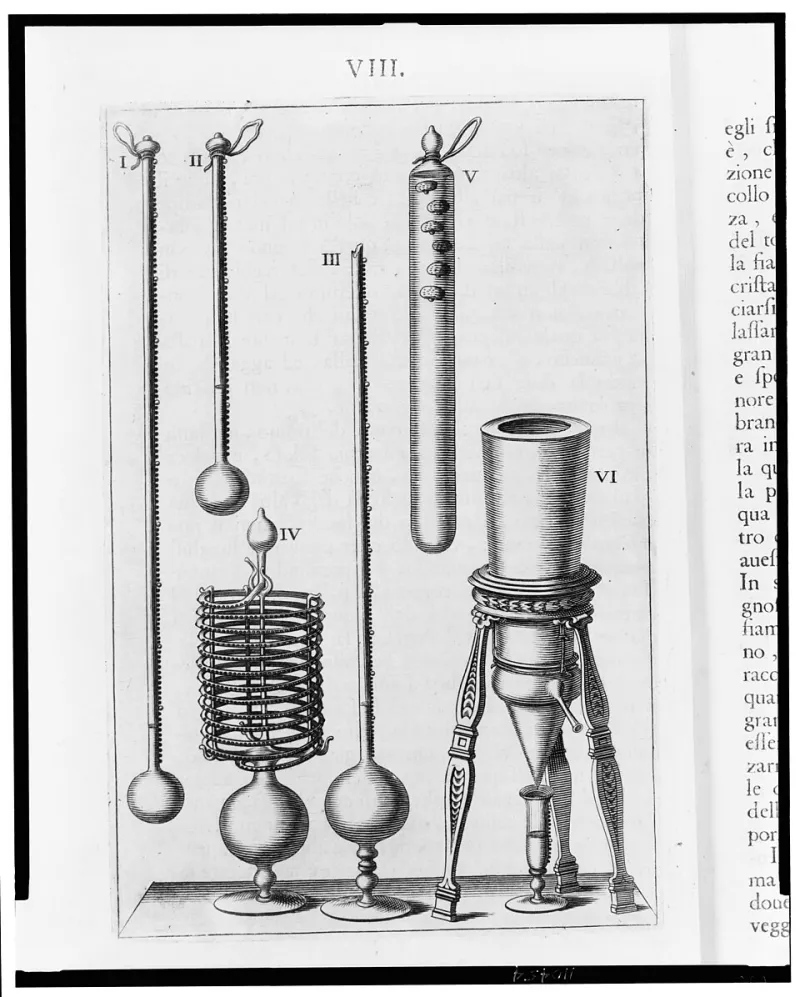
Photo: Magalotti, Lorenzo, conte, 1637-1712., Public domain, via Wikimedia Commons
There's a particular kind of British winter evening where nothing adds up. The heating's been on since four, the thermostat is sitting proudly at 20°C, and yet you're on the sofa in a jumper feeling vaguely damp around the shoulders. Nothing is broken. The boiler is fine. What's off is the thing nobody thinks to check: how much water is floating around in your indoor air.
If your house feels wrong at the right temperature, the dial to look at isn't the one on the wall. It's the small, unglamorous number on a hygrometer.
What relative humidity actually means
Relative humidity — RH, if you like abbreviations — is a percentage telling you how full of water vapour the air is, relative to the most it could hold at that temperature. Warm air can hold a lot; cold air can't. That's why January air outside can be at 90% RH and still feel crisp and dry, while your front room at 20°C can be at 65% and feel like a swimming pool changing room.
The interesting bit happens when you heat cold outside air. Bring in a gust of 4°C air at 85% RH, warm it to 20°C, and the relative humidity plummets — the same water, but a much bigger bucket to hold it. Trouble is, most of us aren't running a controlled air exchange. We're living in a sealed box with a kettle, a shower, a washing machine and four humans breathing out roughly a litre of water a night between them. Add a pan of pasta and a drying airer and the moisture piles up faster than anyone opens a window in the cold.
Why the room feels wrong
Humidity changes how your body sheds heat. In damp air, sweat evaporates slowly, so you feel clammy and chilled at the same time. High humidity also makes a room feel stuffy and heavy, and — less pleasantly — it's exactly what dust mites and mould spores need to thrive. Get the air too dry instead and you'll know about it: tickly throat, static off every door handle, gaps appearing in the floorboards and your grandmother's sideboard quietly splitting.
So there's a band you want to live in, and it's broad enough to be achievable.
Forty to sixty per cent is the target
Aim for somewhere between 40% and 60% relative humidity in the rooms you actually occupy. That's the range the likes of the NHS, the Met Office and every building scientist in the country keep coming back to. Sit above 65% for days on end and you're inviting condensation on cold glass, black speckles in the corner of the bedroom ceiling, and that unmistakable fusty smell in the wardrobe. Sit below 35% and you get dry eyes, sore throats and a house that creaks and shrinks.
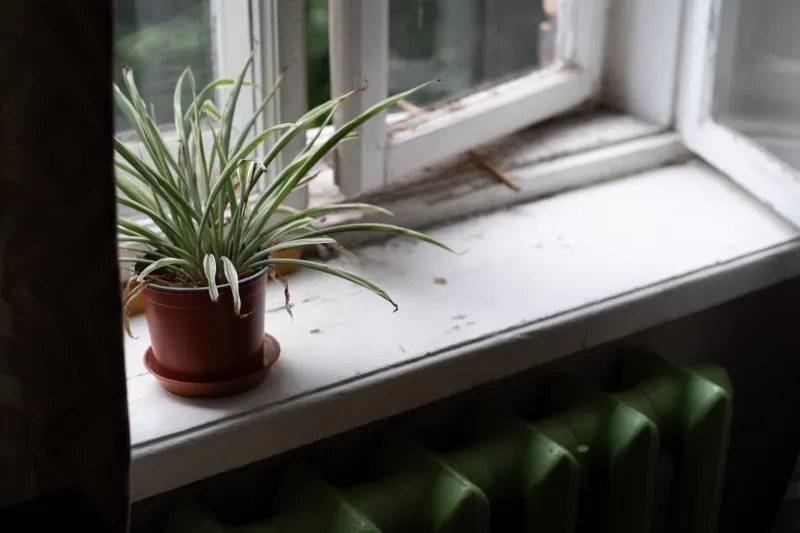
A basic digital hygrometer costs somewhere between eight and twenty pounds and does the job perfectly well. Buy two if you're feeling flush. Place one in the main living space, away from radiators, direct sun, windows and doorways — not on the windowsill above the radiator, which is the single most misleading spot in the house.
Read it like a maintenance schedule
Glance at it once in the morning and once in the evening. That's it. Two seconds, twice a day. What you're looking for isn't a single reading but a pattern. If the bedroom hits 70% overnight and stays there, you've found something worth fixing. If the kitchen spikes to 75% every evening at six and drops back by eight, you've found something worth ventilating.
Room by room, the practical fixes
The kitchen does the heaviest lifting in the moisture stakes. Boiling pasta, a roast, a kettle on repeat — all of it goes into the air. Put a lid on pans, and run the extractor hood for ten minutes after you finish cooking, not just while the hob's on. If your extractor just recirculates through a carbon filter, it isn't removing moisture at all; open a window instead.
The bathroom is the second offender. A decent extractor fan on an overrun timer, running for twenty minutes after a shower, does more than any amount of towel-waving. If the mirror stays fogged for half an hour, the fan is undersized, blocked, or simply not running long enough.
Wherever the laundry dries is the third. An airer in a spare room with the door shut is essentially a humidifier with extra steps. Either dry near an open window with the door closed, use a heated airer with a cover, or accept that the tumble dryer earns its electricity in December.
The bedroom is where most people notice the symptoms first — heavy head, damp pillows, condensation on the glass by morning. Crack a window for ten minutes before bed, even in the cold. The room will recover its warmth far quicker than you'd think.
Where a dehumidifier earns its keep — and where it doesn't
A refrigerant dehumidifier is genuinely useful in a cold, poorly ventilated room: a north-facing bedroom, a garage conversion, a rented flat with a bathroom that never dries. Expect it to pull a couple of litres a day out of the air in a damp winter. What it won't do is fix a leak, a blocked gutter or a dripping overflow — and it won't stop condensation forming on single-glazed sash windows in a cold snap.
Don't leave one running permanently in a room you're sealing up and never airing. Removing moisture is only half the job; the other half is replacing the stale, CO₂-heavy air you're also sitting in.
What air conditioning will and won't do
Air conditioning does dehumidify as it cools — that's why a cooled room feels crisp rather than merely cold. But it's a cooling system, not a winter damp cure. Running it in January won't solve a moisture problem, and a unit sized for summer cooling won't be working in the conditions where damp actually forms. If you've got a genuinely damp room, the answer is ventilation, source control and, where needed, a dedicated dehumidifier.
Don't seal the house to fix it
There's a strong temptation in cold weather to block every draught, close every trickle vent and refuse to open a window until April. Resist it. A house that can't breathe keeps its moisture, and moisture is what makes a warm room feel grim. Ten minutes of purge ventilation twice a day — windows wide, doors open, heating off — will drop the humidity and leave the structure far healthier than a permanently sealed box.
Twenty degrees is a lovely number. Just make sure the one next to it isn't sitting at 70%.